
She grew up in a good household, for years she was close to everything essential to her, purpose felt like a birthright. She lived in harmony with everything essential to her—a symphony of intuition, belief, and quiet resilience. Every day unfolded like the first stroke on a fresh canvas, each one a new blessing. Goals were set, sometimes spanning decades in her eyes, yet she had a way of breaking them into small, attainable moments, savoring the significance of every second. This life was a masterpiece in progress, a forever canvas—defined by its vivid beginnings but shrouded in the mystery of its end.
When she painted, her creativity lended the world her eyes, and for however long people looked at her work, they saw what she saw, felt what she felt and moved in her shoes- her joy, pain and humanity. She wasn’t just creating; she was inviting others into the intricate worlds she built, worlds so rich and real they stayed with you long after you left. Annie wasn’t in the business of selling art; she was in the business of building beautiful worlds and allowing others to experience them.
A lover like her is rare. One so poised and purposeful she made everyone she loved feel complete. Her smile and laughter were contagious. She was an answered prayer for everyone who believed in any god and had made prayers to meet a good person. Whenever she said ‘I love you’, it was never empty. The words came adorned with paintings so raw, so immersive, they silenced even the harshest critics. Annie poured her soul into her art—and into the people she loved. In this tragedy, God was lucky to have her too.
Annie kept herself healthy, staying away from any food, substance or content that would make her mind, body, or spirit impure. She made her mind a productivity masterpiece and reserved her time only for good and noble causes. A keen organ donor, it was a great loss that in an act of unspeakable cruelty, she was reduced to ashes—forever silenced, her promise unfulfilled; to give others a life even after hers was over.
So then, who killed Annie?
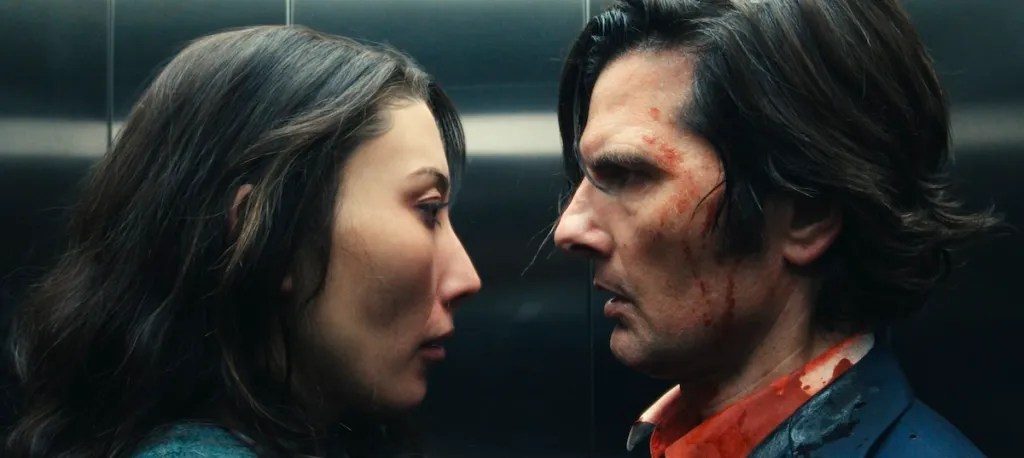
“My time with Annie was wonderful, to say the least. I had my vices, she had hers, but something always seemed to make us one, even when we were clearly falling apart.” His voice trembled as he spoke, his face caught between grief and indifference. He was on the fence between weeping a storm because he loved her and not showing any emotion because he had left her. The tension in his expression mirrored the dissonance in his heart. “Annie never had a reason to love me,” he continued, pausing to catch his breath. “She said that was her reason. To her, it made perfect sense: the fact that we were so different was precisely why we worked. The chaos of us made sense to her. But to me…” He trailed off, struggling to piece his thoughts together.
Ross’s words hung in the air, each one cutting deeper than the last. “When I gave her love, she sacrificed everything it seems,” he admitted. “She sacrificed pieces of herself for me—her identity, her art, the way she saw the world, even some of the people she had cared about most. But for me? It all felt so fast, so overwhelming. I didn’t know how to adapt. Annie was hope in a bottle—hope for a better life, for an extraordinary love—but letting her in meant opening doors I wasn’t ready to face. It was too difficult. I would’ve had to go through hell just to keep her, so I left.” This was Annie’s great contradiction: she gave and gave, even when it hurt her. And yet, for all her selflessness, it wasn’t enough. It wasn’t enough to save the part of her he broke.
For a split second, his composure cracked, and his silence spoke louder than his words ever could. Perhaps, in that fleeting moment, the reflection of his time with Annie—short-lived but profound—flashed before his eyes. He blinked, and the vulnerability was gone, replaced with the practiced nonchalance of someone who had spent too long running.
“To let someone go, some part of you has to hate them,” Ross said, his voice quieter now, almost inaudible. “Not saying I hated her entirely.” He swallowed hard, unable to bring himself to say her name again. “I just couldn’t see us beyond the bubble we’d built. My choice was to burst it quickly, before it suffocated me.” His words, though spoken with finality, carried a weight he couldn’t shake. He couldn’t blame himself for anything, he surely couldn’t have done anything wrong. ”If anything comes to mind, I’ll be sure to call, she was my friend, always there when I needed her. Her soul deserves rest- with justice served, of course.” Then he left, convinced it couldn’t be him. The tragedy lay in the imbalance.
Who burned Annie to ashes?
“A mother could never bring herself to such acts,” she said, her voice trembling under the weight of grief and guilt. Annie’s mother sat rigid, clutching her hands together as if trying to hold herself together. Her emotions betrayed her, though, spilling out in cracks and hesitations. She’d let loose on Annie way often than not. “I loved her… I wanted her to have everything I never could. But maybe… maybe I pushed her too hard. Maybe I wanted too much from her,” her love was never truly felt, all she’d wanted was for her to become more. Her gaze drifted to the ground, as though searching for answers in the silence between her words. “Look around, everyone would see me with shameful eyes if I did anything close to destroying my own daughter. I never would have dreamt of her ending up like me—better than this world allowed me to be. I wanted her to have choices I never had. Maybe I pushed her into the crazy decisions.” She kept talking, her voice cracking a lot. In her attempt to shield Annie from the shadows of her own life, she cast her daughter into a different kind of darkness. Annie, ever the giver, had denied herself countless chances—opportunities to explore her art, her dreams, and her freedom—all in an effort to meet her mother’s expectations.
“I’m a victim too,” she said, her voice cracking under the weight of her own truth. “A victim of this culture, this violence, this… this patriarchy. The world taught me to survive, but it never taught me how to live. And now, my one hope—my Annie—is gone. Forever. Her reasons for living and leaving… they’re scattered everywhere, but none of them make sense anymore. And here I am, having to prove my innocence, when I should be the one asking questions.”
Annie’s mom was dead inside from the violence. Somehow, her resilience kept her going, it was a blessing of sorts. She wanted to be happy, but the system had defined happiness in so many strange ways that she always forgot who she was and could not commit to doing anything for herself. Worse, she forgot to let Annie simply be. “Annie is my treasure. I didn’t need to find out she had this life in art. But she did. When I knew about it, I knew I needed to do something to eliminate the problem.”
The room fell silent, and someone asked the question that had been lingering unspoken, ”Was the problem Annie?”
“What!? Of course not!” she cried, recoiling as though struck. Her voice grew quieter, almost a whisper. “It was everything Annie ever wanted… everything she fought for. I thought I was protecting her. I thought I was helping her avoid my mistakes. But maybe… maybe I was the one standing in her way.”
She stood up, wiping her tears with trembling hands. “I loved my daughter. I wanted the world for her. But now she’s gone.” And with that, Annie’s mother walked out, her sobs echoing down the hallway. Convincing herself that it couldn’t have been her—that she wasn’t capable—was the only thing keeping her from falling apart completely.
Who took Annie off the face of the earth?
“I wouldn’t be able to, even if I tried, Annie was just better.” Her voice carried a practiced innocence, but the bitterness beneath her words was impossible to miss.
Bianca believed in moon signs so much she tried making everyone believe she was the purest of beings. Her heart was filthy. ”Look, Annie got everything we wished for. My moon sign was happy for her, I had to be too. Our crooked world kept me at bay and I never thought anyone, especially Annie, would be to blame.”
Her crocodile tears were well-rehearsed, but they couldn’t hide the flicker of satisfaction in her eyes. Annie’s death had handed Bianca the thing she’d craved for years—freedom from Annie’s shadow. She felt she’d lived under Annie’s shadow so long that she was relieved to finally be the main figure.
“I loved following Annie. She was like a role model. She could do everything I couldn’t, and more. better off, we grew up together, close in our youth but distant as we aged, life’s serve I guess. But honestly? Maybe it was for the better. She became a superior…” Bianca lingered on the word, as though tasting the bitterness of it. “But of course I’d know better than to try anything as awful.” Coupled by a glimpse of doubt, maybe regret. “I have contemplated this happening, I don’t know why. I’ve never seen myself needing to answer towards it though.”
Someone pressed further, breaking the silence that followed. “So, who would you see in your position?”
“Everyone else,” she said quickly, her tone sharp, defensive. She folded her arms, as though shielding herself from further judgment. “I mean, it couldn’t have been me. I didn’t destroy anything. If anything, I was the one who admired her the most. Isn’t that what good friends do?”
Bianca’s final words hung in the air, heavy with contradiction. She was certain—at least, she told herself she was—that she wasn’t the one to destroy any part of Annie. But the way she spoke, the way her envy seeped through her carefully chosen words, said otherwise.
Annie’s sudden departure didn’t leave a visible dent on the world—but in her world, it was everything. She was the anchor, the one who held things together, even when others loosened their grip. Her absence revealed the weight of her presence, a testament to how much she gave and how little she received. For Annie, it was never about failing to relight the love, rebuild the relationship, or salvage the friendship. She didn’t leave because she couldn’t try anymore—she left because she had already given more than anyone should ever have to.
Annie wasn’t broken by those who hurt her. She had been bruised, yes, but not shattered. In truth, her “death” wasn’t the tragedy it seemed. It was her act of freedom, her final masterpiece. She left behind the self-absorbed takers who drained her, who dug holes for her to sink into while she tried to lift them higher. She didn’t belong to them anymore. She was free—a freedom they could never take from her.
Her departure wasn’t defeat; it was a reclamation. Annie didn’t die in despair. She walked away, leaving behind the shadows of people who had once meant the world to her but had chipped away at her spirit. They weren’t her responsibility anymore. None of them were her project. She was no longer a canvas for their selfish strokes. Annie had her own art to care for, her own life to create anew.
The truth is, Annie’s “death” wasn’t an ending—it was a beginning. It wasn’t her surrender; it was her rebellion. By leaving, she shifted the perspective. She reminded the world of who she truly was: an artist who refused to let her soul be painted over by others’ bitterness, jealousy, or control. Her departure was an open gate, not to escape, but to step into a brighter world, a world she would rebuild with the wisdom she carried and the love she had always deserved to give herself.
The ones who “killed” her thought they had won. They believed they’d silenced her light, but the irony is, they were the ones left in darkness. They didn’t destroy Annie—they only revealed themselves. Annie, in her quiet, graceful way, had already made her choice. She’d given herself the ultimate gift: she walked away from their harm and left them behind, forever unreachable.
Her art, her heart, her life—they were hers again. Next time they sought a kind soul to take advantage of, hers wouldn’t be there. Annie had won the war they didn’t even know they were fighting.
And in her victory, there is a lesson for us all: to reclaim ourselves from the parts of us that others try to destroy. To rise from the ashes they leave behind, not as someone broken, but as someone whole, stronger, and untouchable. Annie didn’t just live through it all; she transcended it. She won.



 Tadiwa Vambe
Leave a reply to richardmavuru Cancel reply